
Disclosure: As an Amazon Associate I earn from qualifying purchases. How this site works
Polycarbonate vs ABS Luggage
Polycarbonate and ABS are the two most common hard shell materials. They look similar on a shop shelf but behave differently when a case is dropped, squeezed or thrown into a hold.
Quick answer
ABS vs polycarbonate: ABS is a rigid, low-cost plastic used in many budget hard-shell suitcases; it is often light but can crack more easily under hard impact or cold conditions. Polycarbonate costs more, but it flexes and rebounds better, making it the stronger choice for checked luggage and frequent travel.
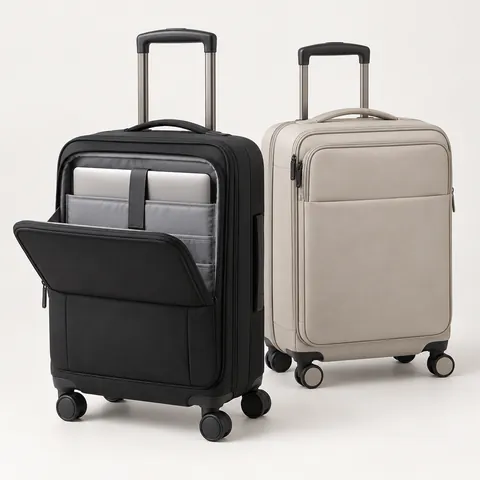 Carry-ons with a laptop pocket
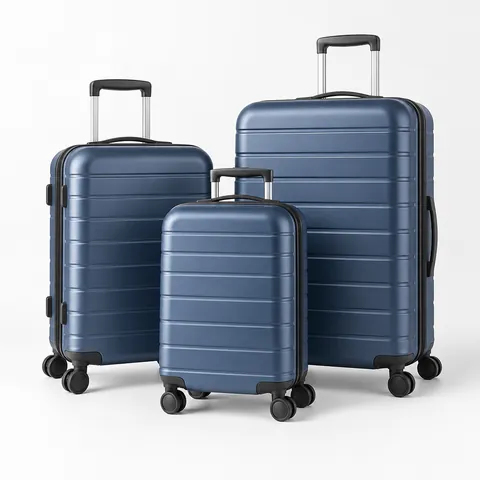 Hard shell luggage sets
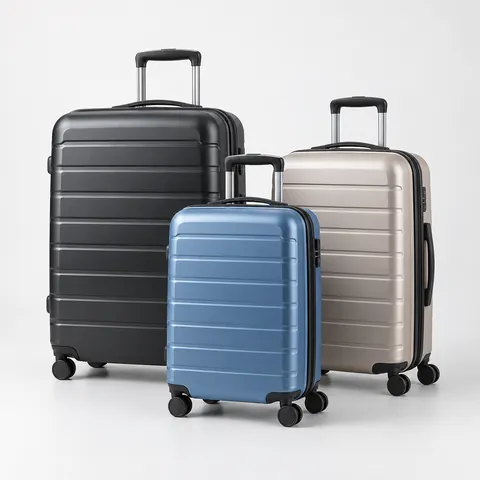 Polycarbonate suitcases
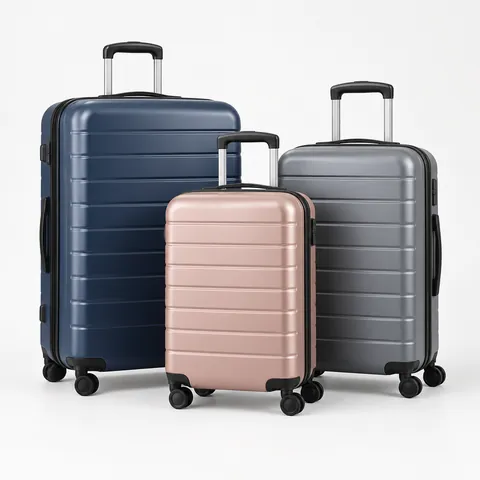 ABS suitcases
ABS, PC/ABS and Polycarbonate Compared
Use the material label to judge what kind of hard shell you are really buying.
| Feature | 100% Polycarbonate | PC/ABS | ABS |
|---|---|---|---|
| Shell makeup | Full polycarbonate shell | Blend or layered shell | Acrylonitrile butadiene styrene |
| Impact behavior | Flexes and rebounds | Middle ground | Stiffer; may crack |
| Typical cost | Higher | Mid-range | Lower |
| Weight | Light | Light | Often very light |
| Best use | Frequent checked travel | Budget upgrade pick | Occasional carry-on use |
| Watch for | Vague “PC” wording | Unknown blend ratio | Cold-weather brittleness |
The short answer
Polycarbonate is usually the better choice for checked luggage because it flexes under impact and springs back instead of cracking. ABS is lighter and cheaper and can be fine for occasional travel or carry-on use, where the case is handled more gently. Blends of PC and ABS fall between the two.
Side-by-side
| Property | Polycarbonate | ABS |
|---|---|---|
| Impact behaviour | Flexes and recovers | Stiffer; may crack or dent |
| Weight | Light | Often slightly lighter |
| Scratches | Shows scuffs, especially glossy finishes | Also scratches; textured finishes hide marks |
| Cold weather | Stays tougher | More brittle in the cold |
| Price | Higher | Lower |
How to tell what you are buying
- Look for “100% polycarbonate” rather than “polycarbonate finish” or just “hardside”.
- A gentle press on the shell of polycarbonate flexes and returns; ABS feels stiffer.
- Very low prices for large hardside cases often indicate ABS or a blend.
- Check the manufacturer’s specification page if a retailer’s listing is unclear.
Browse polycarbonate suitcases and ABS suitcases to compare, and confirm the material on the merchant page.
Is polycarbonate luggage worth it for checked bags?
For checked luggage, the shell material matters more because the bag is more likely to be stacked, tossed, dragged, and exposed to cold cargo areas. Polycarbonate is the safer pick when the suitcase will be checked often, packed close to its limit, or used for international trips with multiple connections.
The main trade-off is cost. If you travel once or twice a year and mostly take short domestic trips, an ABS checked bag may still be a reasonable budget choice. If the trip is important, the route has tight transfers, or replacing a broken suitcase mid-trip would be a major hassle, paying more for polycarbonate usually makes sense.
- Choose polycarbonate for frequent checked travel, ski trips, long-haul flights, cruises with airline transfers, and trips where the bag will be handled by several carriers.
- Consider ABS for occasional checked use, road trips, dorm moves, or travel where you can handle the bag yourself most of the time.
- For a family buying several bags at once, compare hard shell luggage sets by material, not just by the number of pieces included.
Is ABS luggage good enough for carry-on travel?
ABS can be good enough for a carry-on because the bag usually stays with you, goes into an overhead bin, and avoids the roughest baggage handling. The lighter weight can also help if you are trying to stay under an airline limit or prefer a bag that is easier to lift.
The weak point is still impact. A carry-on can be gate-checked on full flights, dropped down jet bridge stairs, or squeezed into an overhead bin. If that happens often, polycarbonate is the better long-term choice. If you usually board early, pack light, and fly nonstop, ABS may be acceptable.
| Travel pattern | Better fit | Why |
|---|---|---|
| Carry-on only, a few trips per year | ABS or PC/ABS blend | Lower cost can be reasonable when handling is light |
| Carry-on that is often gate-checked | Polycarbonate | More forgiving when airline staff handles the bag |
| Business travel with a laptop | Polycarbonate or reinforced carry-on | You may want better shell strength plus organized access |
| Strict weight limits | Compare both | ABS can be lighter, but wheels, handles, and zippers also affect weight |
If you carry a computer, shell material is only one part of the decision. Look for a padded front compartment or separate sleeve, and confirm the laptop size the maker lists. You can compare carry-ons with a laptop pocket if easy device access matters.
What does PC/ABS luggage mean?
PC/ABS means the shell uses a blend of polycarbonate and ABS. It is not the same as a 100% polycarbonate shell, and it is not always made the same way from brand to brand. Some bags use a polycarbonate layer over ABS; others use a mixed plastic formulation.
A blend can be a sensible middle ground when you want a harder shell than basic ABS but do not want to pay for full polycarbonate. The catch is that the listing may not tell you how much of each material is used. If the exact construction is not stated, treat it as a compromise product rather than assuming it will perform like full polycarbonate.
- If a listing says PC shell, read the fine print to see whether it means 100% polycarbonate or PC/ABS.
- If it says polycarbonate coating, that usually describes the surface, not the whole shell.
- If it says ABS plus PC film, expect the bag to behave closer to ABS than to a full polycarbonate case.
- If material is missing from the specifications, ask the seller or choose a listing that states it clearly.
When durability is the main reason you are buying, compare clearly labeled polycarbonate suitcases instead of relying on vague hard shell wording.
What else affects hard shell luggage durability?
A strong shell will not help much if the zipper, wheels, handle, or corners fail first. When comparing two bags made from the same material, look at the construction details before deciding. These parts often determine whether the suitcase is pleasant to use after several trips.
- Check the wheels. Spinner wheels should roll smoothly without wobbling. Larger wheels usually handle carpet, cracks, and airport thresholds better than tiny wheels.
- Inspect the telescoping handle. It should lock at each height without rattling excessively. A shaky handle can make a full suitcase harder to steer.
- Look at corner protection. Corners take direct hits, so reinforced or rounded corners are helpful on checked bags.
- Check the zipper path. The zipper should move evenly around the corners. If it catches when the bag is empty, it may be worse when packed.
- Consider the interior layout. Compression straps and a divider help keep contents from pushing unevenly against the shell.
- Read the warranty terms. Focus on what is covered, how claims are submitted, and whether airline damage is excluded.
Finish also matters. Glossy shells show scuffs more easily, while matte or textured shells tend to hide marks better. This does not necessarily mean one is stronger; it mostly affects how the bag looks after travel.
How to choose between polycarbonate and ABS before you buy
Start with how the suitcase will actually be used, not just the material label. A frequent flyer checking a large bag has different needs than a student buying a cheap carry-on for a few trips home.
- Pick polycarbonate if the bag will be checked often, used in cold weather, packed tightly, or taken on multi-leg flights.
- Pick ABS if price and low weight matter most and the suitcase will usually stay in your control.
- Pick a PC/ABS blend if you want a lower-cost compromise and accept that it may not be as resilient as full polycarbonate.
- Avoid vague listings that only say hard shell unless the seller confirms the actual shell material.
- Do not judge by shell material alone. Compare weight, size, wheels, handles, zippers, warranty language, and interior layout.
If you are between two similar bags, choose the one with clearer specifications. A listing that plainly states the shell material, dimensions, weight, wheel type, lock type, and warranty terms is easier to evaluate than one that relies on broad marketing language.
Frequently asked questions
What is ABS material for luggage?
ABS stands for acrylonitrile butadiene styrene, a common thermoplastic used in lower-cost hard-shell luggage. It is rigid, light, and affordable, but usually less impact-resistant than polycarbonate.
Is ABS polycarbonate the same as polycarbonate?
No. ABS polycarbonate usually means a PC/ABS blend or layered shell, not a 100% polycarbonate suitcase. Treat it as a middle option unless the listing clearly says 100% polycarbonate.
Does ABS luggage break more easily than polycarbonate?
It can, especially when checked, dropped hard, or exposed to cold weather. Polycarbonate generally handles impact better because it flexes instead of staying rigid.
Does polycarbonate luggage crack?
Polycarbonate can crack if it is hit hard enough, especially around stress points such as corners, wheel housings, or handle mounts. Its advantage is that it usually flexes before failing, so it tends to resist impact better than ABS.
Is ABS luggage allowed on airplanes?
Yes. Airlines generally care about the size, weight, and contents of the bag, not whether the hard shell is ABS or polycarbonate. Always check your airline's carry-on and checked-bag limits before flying.
Which is lighter, polycarbonate or ABS?
ABS is often slightly lighter, but the total bag weight also depends on wheels, handles, lining, zippers, locks, and frame design. Do not assume an ABS suitcase is lighter until you compare the listed weight for the same size.
Can a cracked hard shell suitcase be repaired?
Small cracks may be patched temporarily, but a repair is rarely as strong or clean as the original shell. If the crack is near a wheel, handle, hinge, or zipper seam, replacement is usually the more reliable option.
Is 100% polycarbonate better than a polycarbonate coating?
Usually, yes. A 100% polycarbonate shell means the structural shell is polycarbonate, while a coating or film may only affect the outer surface. If durability is the reason you are choosing the bag, look for clear wording that says 100% polycarbonate.
Disclosure: As an Amazon Associate I earn from qualifying purchases. This site may earn a commission when you buy through its links, at no extra cost to you. Product details come from public manufacturer information; always check the merchant page for current specifications and prices. We have not hands-on tested the products described here.