
Disclosure: As an Amazon Associate I earn from qualifying purchases. How this site works
How to Choose the Best Hard Shell Carry-On
The best hard shell carry-on for you is the one that fits your airlines’ limits, weighs little, rolls smoothly and opens the way you pack. Use these criteria to compare cases on any retailer’s site.
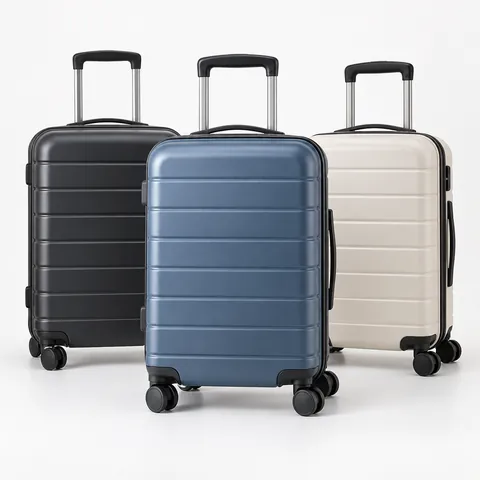 Hard shell carry-on suitcases
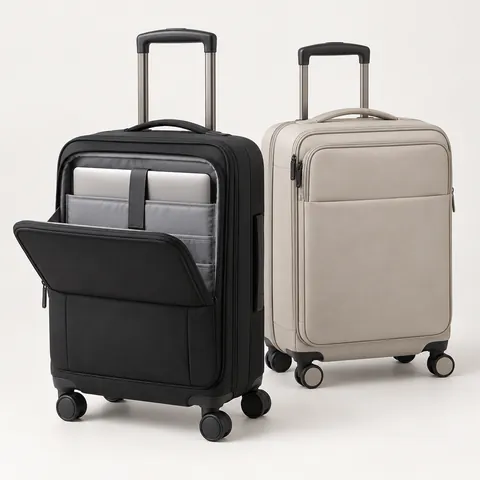 Carry-ons with a laptop pocket
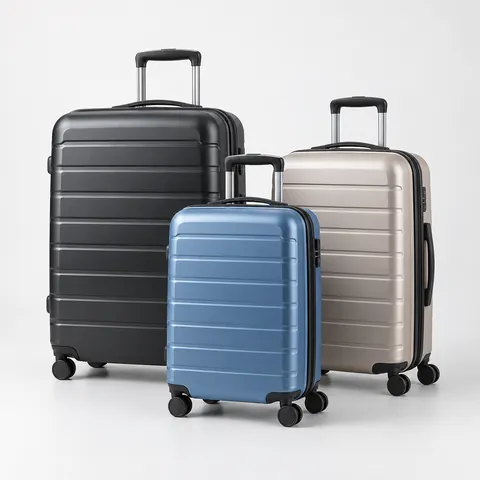 Polycarbonate suitcases
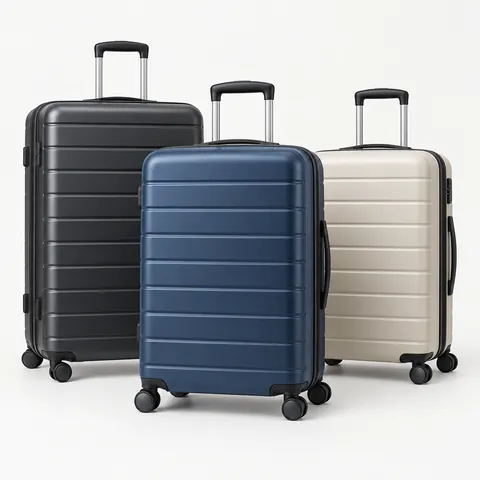 Hard shell checked suitcases
Start with your airlines
List the airlines you fly most and check each one’s carry-on dimensions and weight limit. Pick a case that fits the strictest one you use regularly. Remember that the measurement includes wheels and handles, and that an expanded case may no longer fit. If you often fly budget carriers in Europe or Asia, a smaller “international” carry-on around 55 × 40 × 20 cm is safer than a US-size 22-inch case.
Best choices by traveller
| If you… | Look for |
|---|---|
| Fly budget airlines | Smaller international size, very low empty weight (under about 2.5 kg) |
| Travel for business | Front laptop pocket or opening, quiet double spinner wheels, framed or sturdy zip |
| Take long trips carry-on only | Maximum interior volume within the limit, compression panels, expandable zip (unexpanded for boarding) |
| Travel with fragile items | Pure polycarbonate or aluminium shell, internal divider, corner guards |
| Walk on cobbles or rough ground | Large two-wheel inline wheels or robust spinner wheels |
Compare current carry-on models at hard shell carry-on suitcases and carry-ons with a laptop pocket, and check the listed dimensions against your airline.
Weight matters more than you think
Hardside carry-ons commonly weigh between about 2 and 4 kg empty. On an airline with a 7 kg cabin limit, a 3.5 kg case leaves only 3.5 kg for clothes. Check the empty weight in the specifications, not just the description.
Checklist before buying
- Exterior size including wheels fits your strictest airline.
- Empty weight suits your weight limit.
- Shell material clearly stated.
- Wheels roll smoothly and are replaceable.
- Handle height suits you.
- Interior layout suits how you pack.
- Warranty and return policy are clear.
What size hard shell carry-on should I buy?
Do not rely on the product name alone. A “21-inch” or “22-inch” bag may be measured by the shell height, while airlines usually measure the full outside size with wheels, feet, side handles and the top handle included. Before you buy, find the exterior dimensions in the specification table and compare them with the airline’s sizer limit.
If you want one bag for mixed domestic and international trips, choose the smallest size that still packs well for you. A slightly smaller case can be less frustrating than a larger one that must be gate-checked when overhead bins are tight. If you often pack bulky shoes, jackets or camera gear, look for a boxier shape with less taper at the corners rather than just chasing the tallest case.
A quick at-home check helps if you already own a bag and are replacing it. Stand it against a wall, measure from the floor to the highest handle or wheel point, then measure width and depth at the widest parts. If the case has an expansion zipper, measure it both closed and expanded.
Polycarbonate vs ABS vs aluminum: which shell is best for a carry-on?
Shell material affects weight, impact resistance, flex and price. For carry-on use, the bag is handled less roughly than checked luggage, but it still gets squeezed into bins, rolled over curbs and occasionally gate-checked. The best choice depends on whether you care more about low weight, durability, appearance or cost.
| Material | What to expect | Best for | Trade-off |
|---|---|---|---|
| Polycarbonate | Flexible hard plastic that can bend under pressure and spring back | Frequent travelers who want a lighter durable shell | Usually costs more than basic ABS |
| ABS | Rigid plastic often found on budget hardside luggage | Occasional trips and lower-cost carry-ons | Can be less flexible under hard impacts |
| ABS/polycarbonate blend | Mixed shell construction, often used to balance cost and performance | Travelers wanting a middle ground | Quality varies, so read the exact construction details |
| Aluminum | Very rigid metal shell with a structured feel | Travelers who prioritize protection and a premium frame | Heavier and more prone to visible dents |
If the listing does not say what the shell is made from, treat that as a warning sign. “Hard shell” is not a material. For a stronger long-term pick, compare polycarbonate suitcases and confirm whether the entire shell is polycarbonate or only the outer layer.
Which carry-on features are worth paying for?
Some upgrades make daily travel easier; others add weight or take away packing space. Prioritize the parts you touch every trip: wheels, handle, closure and interior compression.
Double spinner wheels are convenient in airports because the bag can roll upright beside you. Larger inline two-wheel designs can be better on rough sidewalks because they have fewer exposed wheel parts and can handle cracks more easily. If you choose spinners, check that the wheel housings look substantial and that replacement wheels or service parts are available from the brand.
A telescoping handle should lock firmly at more than one height and should not twist much when the case is loaded. If you are tall, look for the extended handle height in reviews or product questions, because some compact carry-ons have short handles that force you to hunch.
A front laptop pocket on a hard shell carry-on is useful for business travel, but it changes the structure of the bag. It may reduce main-compartment space and can make the front side heavier when the laptop is loaded. If you use one, check the laptop pocket size, whether it is padded, and whether the bag still meets depth limits when the pocket is full. For this style, compare carry-ons with a laptop pocket rather than standard clamshell cases.
How do you pack a hard shell carry-on without wasting space?
Most hard shell carry-ons open in a clamshell layout, with two shallow halves instead of one deep compartment. That works well if you separate items by side, but it can feel awkward in a small hotel room because the bag needs more floor space when fully open.
- Put heavier items, such as shoes and toiletry kits, near the wheel end so the case stands more steadily.
- Use the zippered divider for loose items that would fall out when you open the case on a luggage rack.
- Pack flat layers or packing cubes in the opposite half, then use compression straps or panels to reduce shifting.
- Keep liquids and anything needed at security near the top or in a separate personal item, since most hard shell carry-ons do not have an outside pocket.
- Do not overfill the corners. Bulging can stress the zipper and may push the depth over the airline limit.
If you want more capacity, compare the usable interior, not just the outside measurements. Thick handles, deep wheel wells, laptop compartments and heavy interior panels can all reduce packing room. An expansion zipper is helpful after shopping or on the trip home, but plan to board with it closed unless your airline allows the expanded depth.
Zippered or latch hard shell carry-on: which is better?
Most hardside carry-ons use a zipper because it is lighter and allows a little give when the bag is full. Look for smooth zipper pulls, a water-resistant zipper track if you travel in wet weather, and a place where the pulls can be secured by a lock.
Latch or framed cases close with locking points instead of a fabric zipper. They can feel more structured and may be harder to overpack, but they are usually less forgiving if the case is stuffed. Before choosing a latch case, check that the frame lines up cleanly and that the latches are easy to operate without forcing them.
Built-in TSA-accepted locks are convenient, but they should not be the main reason to buy a bag. Locks discourage casual opening, but they do not make luggage theft-proof. The stronger buying signal is still the overall build: shell material, wheels, handle, closure quality and warranty terms.
Frequently asked questions
Are hard shell carry-ons allowed on all airlines?
Yes, hard shell carry-ons are allowed as long as they meet that airline’s size and weight rules. The shell type usually does not matter; the outside dimensions and whether it fits in the sizer do.
Is a hard shell carry-on better than a softside carry-on?
A hard shell carry-on is better for travelers who want a wipe-clean exterior, more structure and better protection from light bumps. A softside carry-on can be better if you want outside pockets, more flexibility when squeezing into tight spaces, or a bag that opens with less floor space.
Do hard shell carry-ons crack?
They can crack if the shell is brittle, overloaded or hit hard, especially in cold conditions or during gate-check handling. More flexible materials, careful packing and avoiding overstuffing reduce the risk.
Should I buy a carry-on luggage set or one bag first?
Buy one carry-on first if you are still learning what size and layout you like. A set can make sense if you need matching bags for several travelers, but make sure each piece fits your actual airline needs rather than buying extra sizes you will not use.
Disclosure: As an Amazon Associate I earn from qualifying purchases. This site may earn a commission when you buy through its links, at no extra cost to you. Product details come from public manufacturer information; always check the merchant page for current specifications and prices. We have not hands-on tested the products described here.